
World No Tobacco Day 2026: Tobacco Cessation & Cancer Screening in Bathinda
World No Tobacco Day is observed every year on 31 May to raise awareness about the harmful effects of tobacco use and encourage people to quit for a healthier future. Led by the World Health Organization (WHO), this global health awareness campaign highlights the devastating impact of smoking, chewing tobacco, vaping, and other nicotine products on individuals, families, and communities worldwide.
At Pragma Hospital Bathinda, we are committed to helping people lead tobacco-free, healthier lives through awareness, early screening, counseling, and medical support.
Tobacco products, including cigarettes, gutka, hookah, khaini, e-cigarettes, and nicotine pouches, damage nearly every organ in the body. World No Tobacco Day 2026 serves as a powerful reminder that choosing a tobacco-free life can significantly improve both lifespan and quality of life.
If you are looking for tobacco cessation support, smoking addiction treatment, or tobacco awareness programs in Bathinda, Pragma Hospital is here to guide and support you every step of the way.
World No Tobacco Day 2026: Key Facts at a Glance
| Detail | Information |
|---|---|
| Date | 31 May 2026 |
| Day | Sunday |
| Organized By | World Health Organization (WHO) |
| Established | 1987 |
| 2026 Theme | "Unmasking the Appeal: Countering Nicotine and Tobacco Addiction" |
| Annual Tobacco Deaths | Over 8 million globally |
| Global Tobacco Users | Approximately 1.3 billion |
| Youth Affected (13–15 years) | 40 million children worldwide |
| Adolescents Using Vapes | 15 million globally |
| Economic Cost | USD 1.4 trillion annually |
The Theme of World No Tobacco Day 2026
The official theme for World No Tobacco Day 2026 is:
"Unmasking the Appeal: Countering Nicotine and Tobacco Addiction"
This theme focuses on exposing how tobacco and nicotine companies continue to redesign and market their products to attract younger users while bypassing stronger tobacco control measures.
Modern products such as e-cigarettes, nicotine pouches, flavored vapes, and synthetic nicotine devices are often promoted as "safer" or "modern" alternatives. However, many of these products are specifically engineered to sustain nicotine addiction and attract new users, especially teenagers and young adults.
According to global health data, nearly 40 million children aged 13–15 already use at least one form of tobacco product. This alarming trend highlights why stronger awareness, regulation, and early intervention are more important than ever.
A Look at Previous World No Tobacco Day Themes
| Year | Theme |
|---|---|
| 2026 | Unmasking the Appeal: Countering Nicotine and Tobacco Addiction |
| 2025 | Bright Products. Dark Intentions. Unmasking the Appeal |
| 2024 | Protecting Children from Tobacco Industry Interference |
| 2023 | Grow Food, Not Tobacco |
| 2022 | Tobacco: Threat to Our Environment |
| 2021 | Commit to Quit |
What Is World No Tobacco Day?
World No Tobacco Day is a global public health campaign observed annually on 31 May under the leadership of the World Health Organization. More than just an awareness event, it is a worldwide movement aimed at reducing tobacco consumption, preventing addiction, and exposing the harmful practices of the tobacco industry.
The campaign was officially established by the WHO in 1988 through Resolution WHA42.19. Since then, governments, hospitals, schools, and health organizations across the world have used this day to promote tobacco awareness, encourage quitting, and advocate for stronger public health policies.
Unlike many awareness campaigns, World No Tobacco Day focuses on two critical goals:
- Encouraging tobacco users to quit
- Holding the tobacco industry accountable for deceptive marketing and youth targeting
The 2026 theme strongly reflects both objectives by highlighting how modern nicotine products continue to fuel addiction among younger generations.
At Pragma Hospital Bathinda, our pulmonology and addiction medicine specialists regularly witness the long-term health consequences of smoking and smokeless tobacco use. Tobacco addiction is not simply a habit — it is a medically recognized dependency that requires awareness, compassion, professional support, and timely treatment.
Tobacco Use in India and Punjab: Why This Day Matters
While tobacco remains a global health crisis, its impact is deeply felt across India and Punjab.
India's Tobacco Burden
India is the world's second-largest producer and consumer of tobacco. The numbers are staggering:
- Tobacco causes approximately 1.35 million deaths in India every year
- Nearly 28.6% of Indian adults use some form of tobacco
- India contributes around 6% of global tobacco-related deaths
- Tobacco-related illnesses cost the Indian economy more than ₹1 lakh crore annually
- Smokeless tobacco products such as gutka and khaini account for the majority of tobacco use in India
Punjab's Growing Challenge
Punjab faces a serious and often underestimated tobacco problem.
Products like gutka, zarda, khaini, hookah, and flavored nicotine products are widely consumed across the region. Alarmingly, younger age groups are increasingly exposed to vaping and nicotine addiction.
Oral cancers linked to smokeless tobacco are among the most commonly reported cancers in North India, including Punjab.
At Pragma Hospital Bathinda, our doctors regularly treat patients suffering from tobacco-related cancers, lung disease, cardiovascular complications, and addiction-related health conditions.
World No Tobacco Day 2026 reminds us that awareness, early diagnosis, and timely medical support can save lives.
📅 Book a Consultation at Pragma Hospital Bathinda →
Harmful Effects of Tobacco on the Human Body
Tobacco smoke contains more than 7,000 chemicals, including dozens of cancer-causing substances. Both smoking and smokeless tobacco can severely damage multiple organs and systems in the body.
1. Lung Damage and Respiratory Disease
Smoking destroys lung tissue and significantly increases the risk of Chronic Obstructive Pulmonary Disease (COPD), chronic bronchitis, emphysema, and lung cancer. Smoking is responsible for approximately 85% of lung cancer cases worldwide. At Pragma Hospital's Pulmonology Department, our specialists treat advanced lung disease daily — much of it preventable.
2. Heart Disease and Stroke
Tobacco damages blood vessels, raises blood pressure, and increases clot formation, dramatically raising the risk of heart attacks, stroke, and coronary artery disease. Our Cardiology team at Pragma Hospital consistently identifies tobacco as a primary modifiable risk factor in cardiac patients.
3. Cancer Risk
Tobacco use is directly linked to cancers of the mouth, throat, lungs, oesophagus, pancreas, kidney, bladder, and cervix. In India, tobacco chewing remains one of the leading causes of oral cancer. Pragma Hospital's Oncology Department offers comprehensive cancer screening and treatment.
4. Weak Immunity and Poor Healing
Tobacco weakens the immune system, slows wound healing, and increases susceptibility to infections and chronic illnesses. This is particularly dangerous for post-surgical patients and those managing diabetes.
5. Pregnancy Complications
Smoking and nicotine use during pregnancy increase the risk of premature birth, low birth weight, miscarriage, and developmental complications. Our Obstetrics and Gynaecology team strongly advises complete tobacco cessation before and during pregnancy.
💡 Expert Insight from Pragma Hospital: No safe level of tobacco use exists. Even occasional smoking or passive smoke exposure carries measurable health risk. The single most impactful health decision most tobacco users can make is to quit — and the body begins responding within minutes of the last cigarette.
Early Warning Signs of Tobacco-Related Illness
Tobacco-related diseases often develop silently over time. Early diagnosis can greatly improve treatment outcomes. Do not ignore symptoms such as:
- Persistent cough lasting more than three weeks
- Mouth ulcers that do not heal
- White or red patches inside the mouth (leukoplakia or erythroplakia)
- Voice changes or hoarseness
- Difficulty swallowing
- Chest pain or breathlessness
- Unexplained weight loss
- Frequent respiratory infections
If you notice any of these warning signs, seek medical attention immediately. At Pragma Hospital Bathinda, our Pulmonology, Oncology, and ENT departments offer comprehensive screening for tobacco-related conditions.
Benefits of Quitting Tobacco
The human body begins healing soon after tobacco use stops.
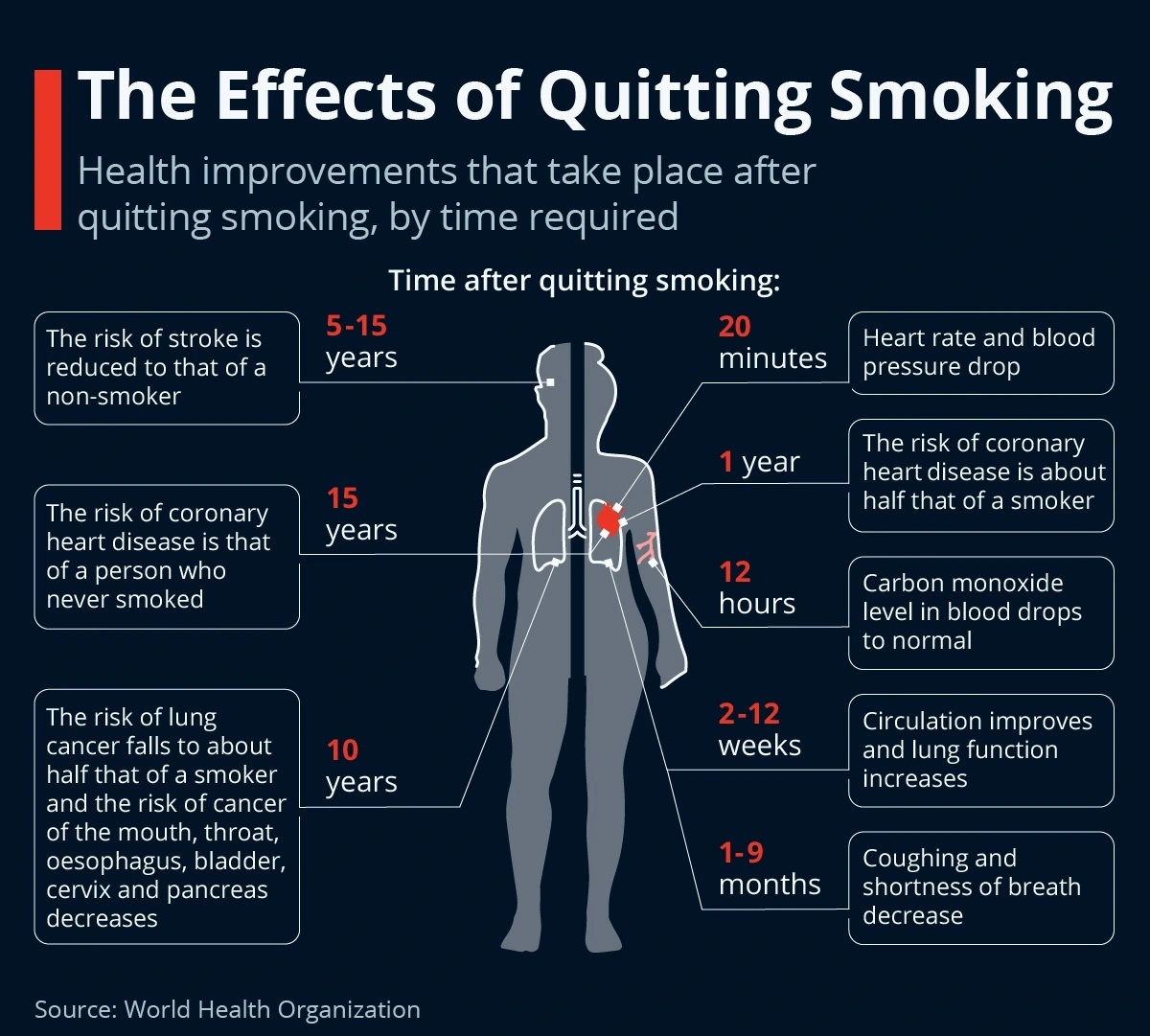
Your Body's Recovery Timeline After Quitting Smoking | Source: WHO
Recovery Timeline After Quitting Smoking
- Within 20 minutes: Heart rate and blood pressure improve
- After 12 hours: Carbon monoxide levels return to normal
- Within 2–12 weeks: Lung function and circulation improve
- After 1 year: Risk of heart disease reduces significantly
- After 5–15 years: Stroke risk approaches that of a non-smoker
No matter how long you have used tobacco, quitting today can improve your health and quality of life.
How to Quit Tobacco Successfully
Quitting tobacco can be difficult, but professional support and proven treatment methods can dramatically improve success rates. Most people who try to quit without help will relapse — that is not a personal failure; it is the nature of addiction. The good news is that combining the right strategies dramatically increases the chances of success.
Step 1 — Set a Quit Date
Decide on a specific date to stop. Tell people you trust. Mark May 31, 2026 — World No Tobacco Day — as your quit date!
Step 2 — Use Nicotine Replacement Therapy (NRT)
NRT provides controlled doses of medicinal nicotine to reduce withdrawal symptoms without the harmful chemicals in tobacco. Options include:
- Nicotine patches
- Nicotine gum or lozenges
- Nasal sprays or inhalers
Combining a long-acting NRT with a short-acting one increases quit rates significantly.
Step 3 — Consider Prescription Medications
The WHO recommends the following prescription medications for tobacco cessation:
- Varenicline — blocks nicotine receptors and reduces cravings
- Bupropion — an antidepressant that also reduces nicotine cravings
- Cytisine — a plant-derived medication with a strong evidence base
Step 4 — Get Behavioral Support
WHO recommends behavioral interventions alongside medication. Options include:
- Brief counseling from a health worker
- Cognitive Behavioral Therapy (CBT) to identify triggers and build coping strategies
- Motivational Interviewing to resolve ambivalence about quitting
- Telephone quitlines — proven to increase quit rates by 25–50%
- Group support programs and peer communities
Step 5 — Manage Triggers
Know what causes your urge to smoke — stress, boredom, after meals, social situations — and plan your response in advance. Pragma Hospital's counseling team can help you develop a personalized trigger management plan.
World No Tobacco Day 2026 at Pragma Hospital Bathinda
Pragma Hospital Bathinda remains dedicated to spreading awareness about the dangers of tobacco and helping people overcome nicotine addiction. Our expected awareness initiatives include:
Tobacco Cessation Counseling
Our specialists provide personalized guidance to anyone looking to quit — whether you smoke cigarettes, use gutka, khaini, or have switched to vaping or nicotine pouches. Quitting tobacco is a medical process, and our team is here to support you through it without judgment.
Health Check-Up Camps
Free or subsidised health check-up camps help community members identify early signs of tobacco-related conditions — including lung disease, oral lesions, and cardiovascular risk — before they become serious.
Educational Outreach Programs
Given Punjab's high burden of smokeless tobacco use, awareness and education remain critical. Pragma Hospital's outreach efforts focus on reaching students, families, and working adults with clear, accurate information about the real risks of all tobacco and nicotine products.
For the latest updates, follow us on Instagram and Facebook , or call us directly on 085588 18499.
Whether you are ready to quit today or just want to understand your options — our doctors are here to help.
👉 Book a Consultation at Pragma Hospital →Frequently Asked Questions (FAQ)
Q1. What is the purpose of World No Tobacco Day?
The purpose is to spread awareness about the harmful effects of tobacco and encourage people to quit smoking and tobacco use.
Q2. When is World No Tobacco Day observed?
It is observed every year on 31 May.
Q3. Who organizes World No Tobacco Day?
The campaign is organized by the World Health Organization (WHO).
Q4. Can quitting tobacco improve health?
Yes. Quitting tobacco lowers the risk of cancer, heart disease, stroke, and lung disease, and the body begins recovering almost immediately after quitting.
Q5. Is vaping safer than smoking?
Vaping may expose users to fewer combustion toxins than cigarettes, but it still delivers addictive nicotine and potentially harmful chemicals. It is not considered completely safe. The WHO advises against e-cigarettes, especially for young people.
Q6. What are the early signs of tobacco-related cancer?
Persistent cough, mouth ulcers, voice changes, unexplained weight loss, and difficulty swallowing can be warning signs. If you notice any of these, book a consultation at Pragma Hospital immediately.
Q7. How long does nicotine withdrawal last?
Withdrawal symptoms usually improve within a few weeks, although cravings may continue longer. Professional support can make this process much easier.
Q8. Can young people become addicted quickly?
Yes. Nicotine addiction can develop rapidly, especially in teenagers and young adults. This is why protecting youth from tobacco marketing is a key focus of World No Tobacco Day 2026.
Q9. What happens to your body after quitting smoking?
After quitting smoking, your body begins healing almost immediately. Within hours, blood oxygen levels improve, and over time the risk of heart disease, stroke, lung disease, and several cancers decreases significantly. The longer you stay tobacco-free, the greater the health benefits.
Q10 What is the best way to quit tobacco permanently?
The best way to quit tobacco is through a combination of professional medical guidance, behavioral support, lifestyle changes, and, when appropriate, nicotine replacement therapy or prescribed medications. Seeking help from healthcare professionals can greatly improve your chances of quitting successfully.
Take the First Step Toward a Tobacco Free Life
Quitting tobacco can reduce your risk of cancer, heart disease, and serious lung conditions. If you or your loved one is struggling with smoking or tobacco addiction, our specialists at Pragma Hospital Bathinda are here to help.
We offer comprehensive smoking cessation programs, addiction counseling, pulmonology consultations, and cancer screenings — all under one roof.
📅 Book a Consultation Today📍 Pragma Hospital, Bathinda, Punjab | 📞 Call us for appointments | 🌐 pragma.co.in